Invented in an Amsterdam bar
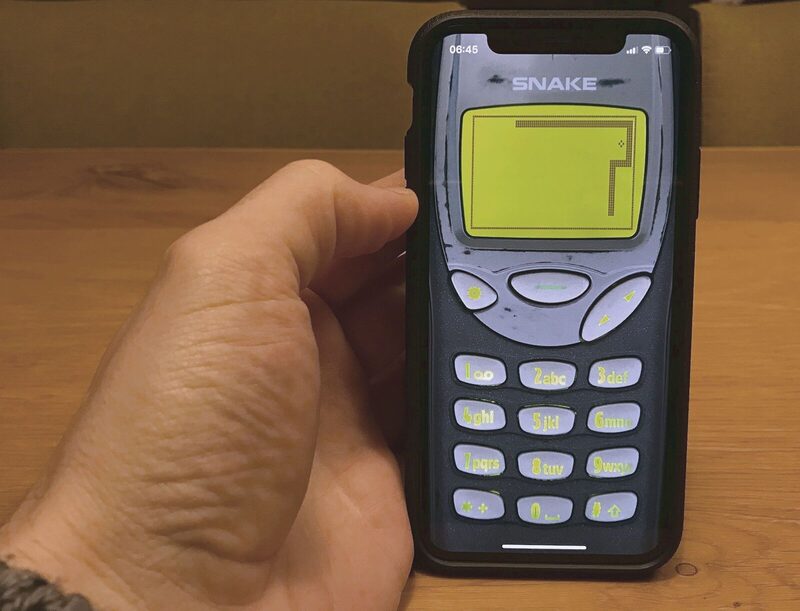
In 2011 the developer's brother threw a beer over his iPhone in an Amsterdam bar. The phone did not survive the Dutch brew. While waiting for a replacement, an old phone came out of the drawer: a phone that could do nothing but text, call and play Snake. Somewhere between two rounds it became obvious what the smartphone was missing, and the idea for an accurate Snake remake was born.

The first working prototype took about two weeks. The other brother helped with the graphics by shooting razor-sharp macro photos of the old phone. Those photos are still the game: millions of people carry a copy of the developer's own phone in their pocket.
Rocking the charts
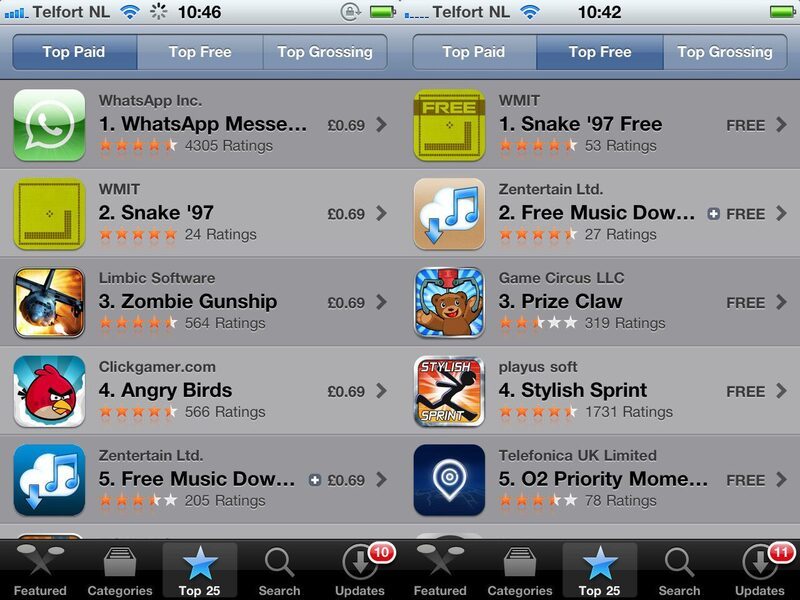
Big blogs picked the game up and Snake '97 climbed the top rankings all over the world, sharing chart space with Angry Birds and WhatsApp. Today it has passed 41 million downloads and is translated into more than 50 languages.
One game engine to rule them all
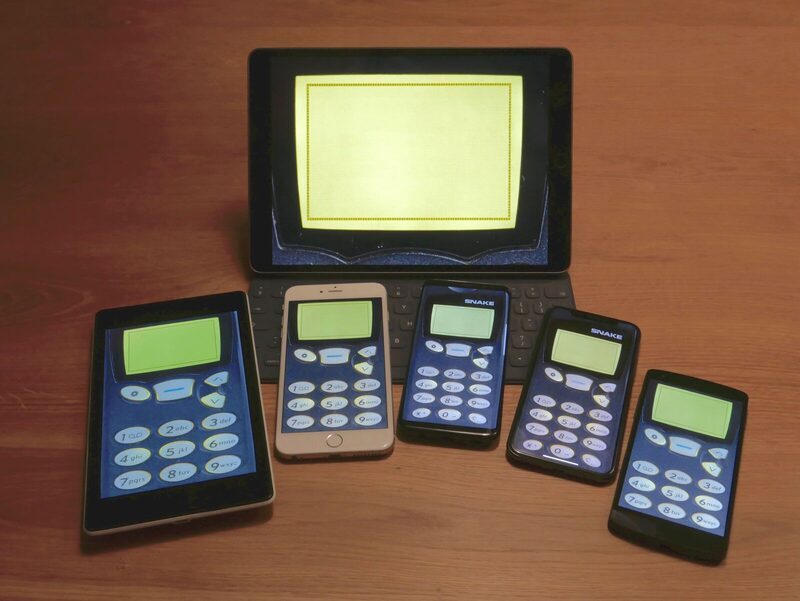
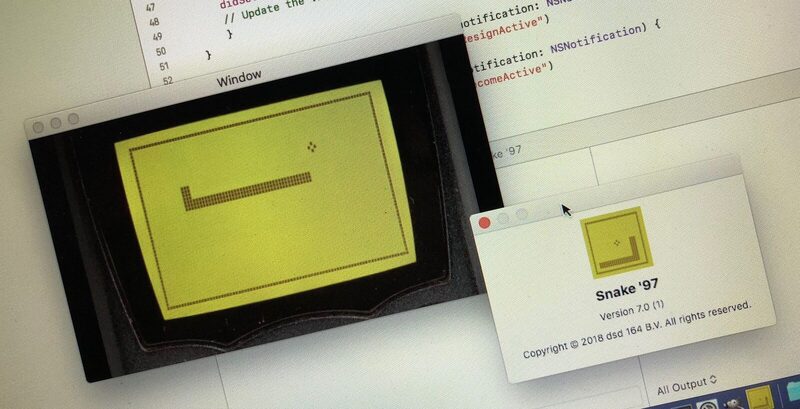
The original versions each had their own native engine: Objective-C for iOS, Java for Android, C# for Windows. Six engines in total, and every new device meant six times the work. In 2018 the developer bit the bullet and replaced them all with a single engine built on web technology: one codebase that measures screen size, orientation and pixel density, and fits itself to every display in the world, notch included.
Timing, measured in slow motion
Snake is played on muscle memory, so the timing must be identical on a six-core flagship and a bargain phone. The developer filmed gameplay with a high-speed camera and compared it frame by frame, then built an internal benchmark that tunes the game speed precisely to the device it runs on.
The whole screen is a button
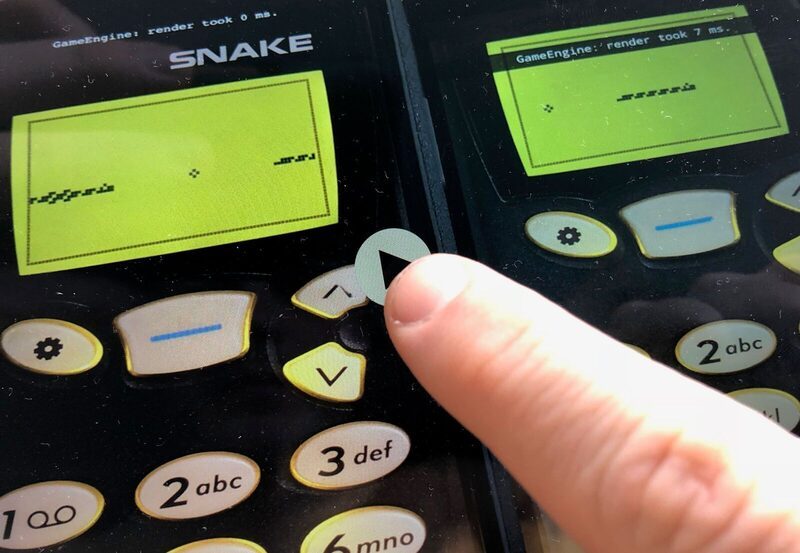
Instead of fixed buttons with hard-coded coordinates for every new phone, the engine keeps a matrix of virtual keys and finds the nearest one to your finger with the Pythagoras theorem. The entire screen becomes a keypad. Keyboards work too, and thanks to the Gamepad API so do game controllers; a full working day was officially lost to "testing" with a SNES pad.
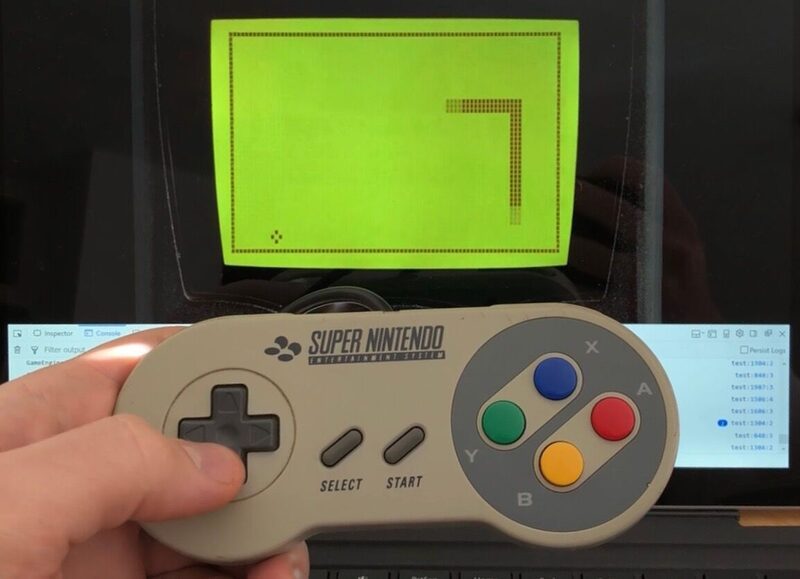
From pocket to desktop
The same scalable graphics put the game on the Mac, in a window or fullscreen, and on Windows and ChromeOS. One engine, every screen you own.
High scores, framed
In 2022 Belgian artist Zena Van den Block invited the developer to Antwerp. She had been collecting her Snake '97 end-game screens for months and turned the final twists of the snake into canvases: dot-matrix lines in a green that glows in the dark, finished with a plastic-like surface that echoes the phone displays of yesteryear. The series, "High Scores", was exhibited at SECONDroom Antwerp.
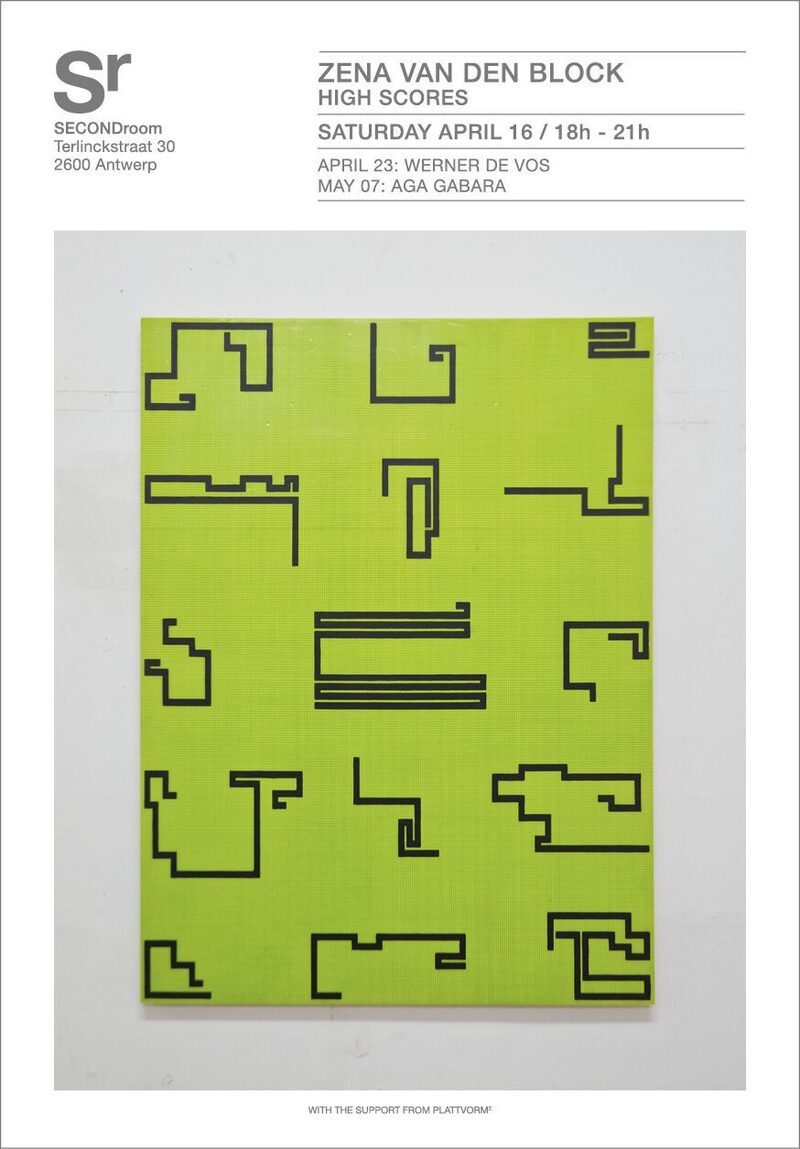
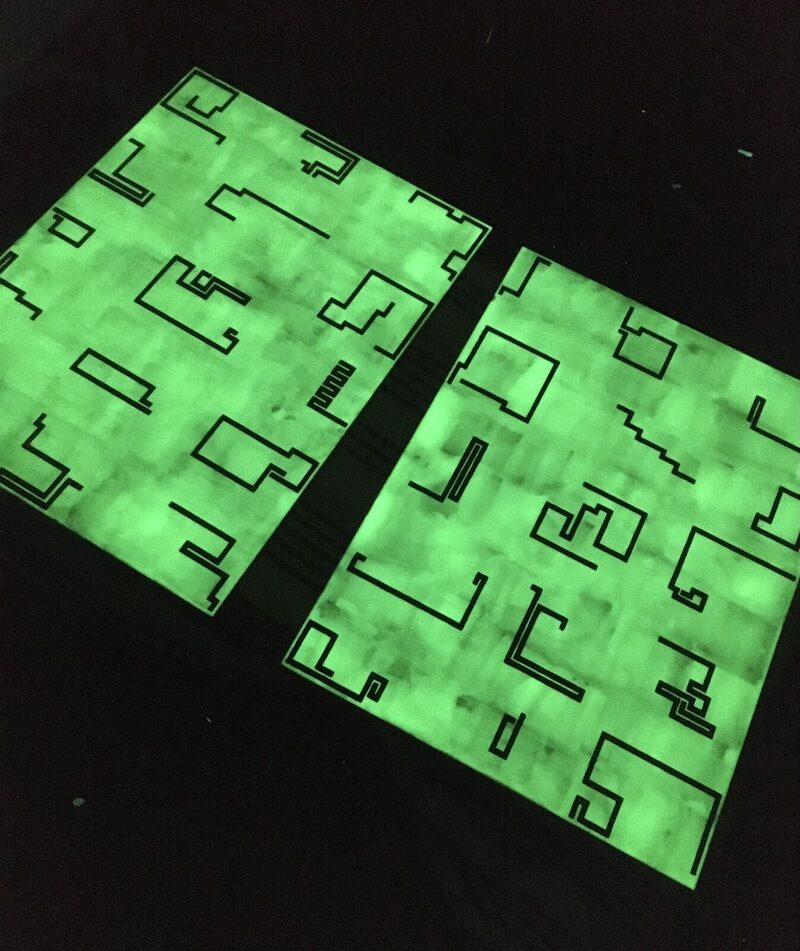
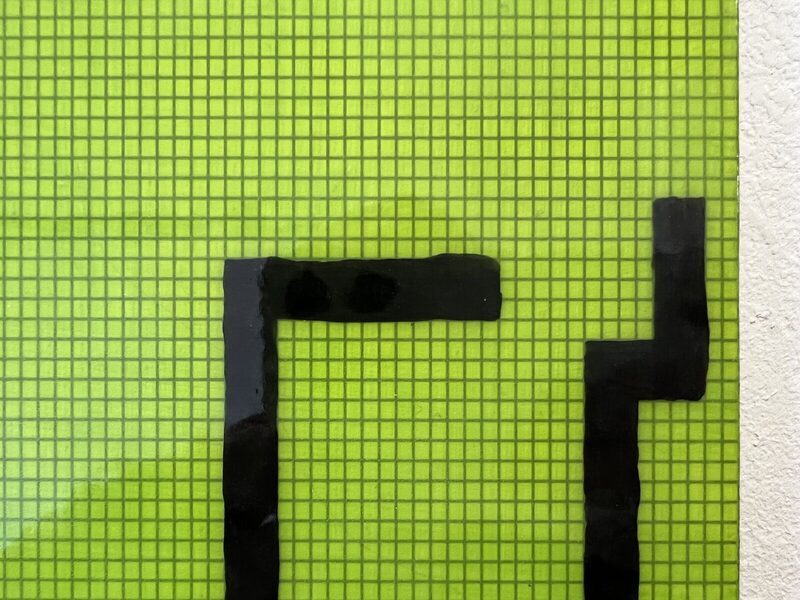
The developer's one-word review: WOW. Asked what Snake has earned him, he finds it hard to think of anything more valuable than meeting people like Zena.
Read the full stories
Both chapters come from the developer's own blog, in his own words and with many more photos: Updating Snake '97 (2018) and Snake '97 High Scores (2022). Or see the blog overview.